Crossplay Tracing: Request Tracking for Cross-Platform Gaming
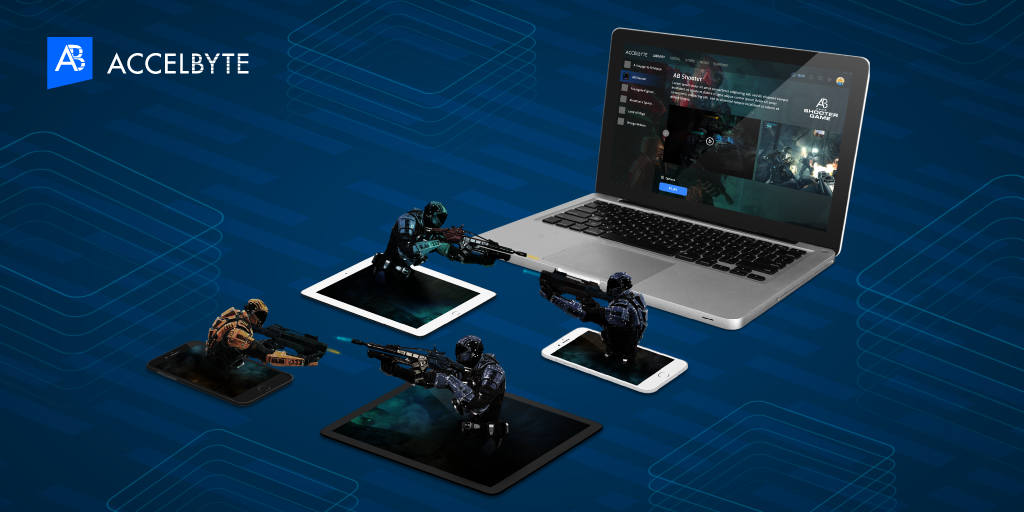
Imagine you're coordinating a massive online game where players on PCs, consoles, and mobile devices are all battling it out together. Sounds awesome, right? But what happens when someone reports a lag spike, a glitched item, or some other weird anomaly? Figuring out the root cause across all those different platforms can quickly turn into a detective story you never signed up for.
Developing and maintaining cross-platform games presents a unique set of challenges. The complexity multiplies as you integrate different ecosystems, each with its own infrastructure, security protocols, and performance characteristics. Pinpointing the source of errors becomes exponentially more difficult when requests hop between various services, operating systems, and network environments. This often leads to slow debugging cycles, frustrated players, and a general feeling of being lost in the weeds.
Crossplay Tracing aims to illuminate these murky waters. It gives developers a clear, end-to-end view of how requests flow through their cross-platform gaming environment, making it easier to identify bottlenecks, diagnose errors, and ultimately deliver a smoother, more enjoyable experience for everyone.
This article explores the intricacies of crossplay tracing, delving into how it helps to track requests in cross-platform gaming, the problems it solves, and the benefits it unlocks. From understanding request flows to tackling performance bottlenecks, we'll cover key aspects of crossplay tracing to help improve your cross-platform gaming experience.
The Importance of Request Tracking
I remember one particularly frustrating situation while working on a cross-platform game where players were experiencing intermittent lag spikes. Some were on PC, others on Play Station, and still others on mobile. The lag was seemingly random, making it incredibly difficult to reproduce in a controlled environment. We spent days poring over server logs, client logs, and network traffic captures, but couldn't find a consistent pattern. Eventually, after what felt like an eternity, we discovered that a specific function in our matchmaking service was occasionally causing a deadlock. This function only triggered under very specific circumstances involving players from different platforms connecting to the same game session. Without a comprehensive view of the entire request flow, that problem would have remained a mystery much longer, and our players would have continued to suffer. Request tracking is crucial because it provides that comprehensive view. It allows developers to follow the journey of a request as it travels through different services and platforms, identifying where the request slows down, encounters errors, or deviates from its expected path. In the context of crossplay gaming, this becomes even more critical due to the increased complexity of the system. Different platforms have different architectures, network conditions, and processing capabilities. Request tracking helps to isolate issues specific to a certain platform or issues that arise when different platforms interact. It's like having a GPS for your requests, showing you exactly where they are and how they're behaving.
What is Crossplay Tracing?
Crossplay tracing, at its core, is a distributed tracing solution tailored for cross-platform gaming environments. It involves instrumenting your game and its backend services to generate traces, which are detailed records of the execution path of a request. These traces are then collected, analyzed, and visualized, providing developers with a holistic view of the system's behavior. Imagine each request as a river, and crossplay tracing as a set of sensors along the river's course. These sensors record data about the river's flow, such as its speed, depth, and temperature, at different points. By analyzing this data, you can identify areas where the river is slowing down, encountering obstacles, or experiencing unusual changes. In the same way, crossplay tracing allows you to monitor the performance of your game's requests across different platforms, identify bottlenecks, and diagnose errors. A typical crossplay tracing system consists of several components, including tracing libraries, a data collection agent, a storage backend, and a visualization dashboard. Tracing libraries are integrated into your game and backend services to generate traces. The data collection agent gathers these traces and forwards them to a storage backend. The visualization dashboard allows you to query and analyze the traces, providing you with insights into the system's behavior. By leveraging crossplay tracing, you can gain a deeper understanding of your game's performance, identify areas for improvement, and deliver a smoother, more enjoyable experience for your players.
The History and Myth of Crossplay Tracing
The concept of distributed tracing has been around for quite some time, originating in the world of large-scale web applications and microservices. Early tracing systems like Google's Dapper were instrumental in understanding the performance of complex distributed systems. However, applying these techniques to the unique challenges of cross-platform gaming is a relatively recent development. One myth surrounding crossplay tracing is that it's too complex or resource-intensive to implement in a game environment. While it's true that integrating tracing libraries and collecting trace data can add some overhead, the benefits of improved performance and faster debugging often outweigh the costs. Moreover, modern tracing tools are designed to be lightweight and efficient, minimizing their impact on game performance. Another myth is that crossplay tracing is only useful for large, complex games with thousands of players. In reality, even smaller games can benefit from tracing, especially those that rely on cross-platform multiplayer. Tracing can help to identify performance bottlenecks that might not be apparent in a single-platform environment, ensuring that all players have a consistent and enjoyable experience. As cross-platform gaming continues to grow in popularity, crossplay tracing is becoming an essential tool for developers who want to deliver high-quality, reliable gaming experiences. It empowers them to proactively identify and resolve issues, optimize performance, and ultimately create a more engaging and satisfying experience for their players.
Hidden Secrets of Crossplay Tracing
One of the lesser-known secrets of crossplay tracing is its ability to uncover hidden dependencies and interactions between different components of your game. Often, developers are unaware of the full extent to which their game relies on various backend services and third-party APIs. Crossplay tracing can reveal these dependencies, highlighting potential points of failure and areas where performance can be improved. For example, you might discover that a seemingly simple in-game action triggers a complex chain of requests across multiple services, including authentication, matchmaking, and inventory management. By visualizing this chain, you can identify bottlenecks and optimize the flow of requests. Another secret is the power of correlation. Crossplay tracing allows you to correlate events across different platforms and services, providing a holistic view of the user experience. For instance, you can correlate a user's login event on their PC with their subsequent in-game actions on their console. This enables you to track user behavior across different devices, identify patterns, and personalize the gaming experience. Furthermore, crossplay tracing can be used to detect and prevent cheating. By monitoring the flow of requests related to in-game transactions and player actions, you can identify suspicious behavior and take appropriate measures to prevent cheating. This can help to maintain a fair and competitive gaming environment, ensuring that all players have an equal opportunity to succeed. Ultimately, the hidden secrets of crossplay tracing lie in its ability to provide developers with a deeper understanding of their game's inner workings, enabling them to optimize performance, improve user experience, and maintain a fair and secure gaming environment.
Recommendations for Crossplay Tracing
When embarking on your crossplay tracing journey, several key recommendations can significantly impact your success. First and foremost, start small and iterate. Don't try to instrument your entire game and backend infrastructure at once. Instead, focus on a specific feature or subsystem and gradually expand your tracing coverage. This allows you to learn from your experiences and refine your approach as you go. Second, choose the right tracing tools for your needs. There are many open-source and commercial tracing solutions available, each with its own strengths and weaknesses. Consider factors such as the size and complexity of your game, your budget, and your team's expertise when making your decision. Third, ensure that your tracing data is properly secured. Tracing data can contain sensitive information about your users and your game's infrastructure. Implement appropriate security measures to protect this data from unauthorized access. Fourth, train your team on how to use and interpret tracing data. Tracing is a powerful tool, but it's only effective if your team knows how to use it properly. Provide your team with training on how to query tracing data, analyze performance bottlenecks, and diagnose errors. Finally, make tracing an integral part of your development process. Don't just use tracing to troubleshoot problems after they occur. Instead, use it proactively to monitor performance, identify potential issues, and optimize your game's code. By following these recommendations, you can maximize the benefits of crossplay tracing and deliver a smoother, more enjoyable gaming experience for your players.
The Role of Distributed Tracing
Distributed tracing plays a pivotal role in crossplay tracing, enabling developers to track requests as they traverse various services and platforms. It provides a complete picture of the request flow, from the moment it originates on the client to the moment it reaches its destination on the server. This is crucial for identifying bottlenecks, diagnosing errors, and understanding the overall performance of the system. In a distributed tracing system, each service and platform involved in handling a request is instrumented with tracing libraries. These libraries generate spans, which represent individual units of work within the request's execution path. Spans are then linked together to form a trace, which represents the complete end-to-end flow of the request. By analyzing the spans in a trace, developers can identify which services are taking the longest to process the request, which services are encountering errors, and which services are contributing to overall latency. Distributed tracing also enables developers to correlate events across different services and platforms. For example, you can correlate a user's login event on their PC with their subsequent in-game actions on their console. This allows you to track user behavior across different devices, identify patterns, and personalize the gaming experience. Several popular distributed tracing systems are available, including Jaeger, Zipkin, and Open Telemetry. These systems provide a variety of features, such as trace visualization, query capabilities, and alerting mechanisms. By leveraging distributed tracing, developers can gain a deeper understanding of their game's performance, identify areas for improvement, and deliver a smoother, more enjoyable experience for their players.
Tips for Effective Crossplay Tracing
To truly master crossplay tracing, consider these essential tips to maximize its effectiveness. First, be strategic about instrumentation. Don't instrument everything, as this can lead to overwhelming amounts of data and unnecessary overhead. Focus on instrumenting critical paths and areas where you suspect performance bottlenecks or errors are likely to occur. Second, use meaningful span names and tags. Span names should clearly describe the unit of work being performed, and tags should provide additional context, such as the platform, the user ID, or the request type. This makes it easier to query and analyze your tracing data. Third, be consistent with your tracing data. Use a consistent naming convention for your span names and tags across all services and platforms. This makes it easier to correlate events and identify patterns. Fourth, automate your tracing data analysis. Use automated tools and scripts to analyze your tracing data and identify potential issues. This can help you to proactively detect and resolve problems before they impact your players. Fifth, integrate tracing into your CI/CD pipeline. Use tracing to monitor the performance of your game during development and testing. This can help you to identify and resolve performance issues early in the development cycle. Sixth, regularly review your tracing data. Make it a habit to regularly review your tracing data to identify trends and patterns. This can help you to proactively identify potential issues and optimize your game's performance. By following these tips, you can unlock the full potential of crossplay tracing and deliver a smoother, more enjoyable gaming experience for your players.
Understanding Sampling Rates
One critical aspect of effective crossplay tracing is understanding and properly configuring sampling rates. Sampling rates determine the percentage of requests that are traced. Tracing every single request can generate a massive amount of data, which can be costly to store and analyze. On the other hand, tracing too few requests can lead to missing important issues. Choosing the right sampling rate is a delicate balancing act. Several factors can influence your choice of sampling rate. For example, if you're experiencing frequent errors or performance bottlenecks, you might want to increase the sampling rate to capture more data. Conversely, if your game is running smoothly, you can reduce the sampling rate to save on storage costs. Another factor to consider is the complexity of your game. More complex games tend to have more intricate request flows, which means that a higher sampling rate may be necessary to capture all of the relevant information. Various sampling strategies are available, including probabilistic sampling, rate limiting, and adaptive sampling. Probabilistic sampling involves randomly selecting a percentage of requests to trace. Rate limiting involves limiting the number of traces per unit of time. Adaptive sampling involves dynamically adjusting the sampling rate based on the observed behavior of the system. By understanding and properly configuring sampling rates, you can optimize the trade-off between data volume and data fidelity, ensuring that you capture the right amount of information to effectively troubleshoot and optimize your game.
Fun Facts of Crossplay Tracing
Did you know that crossplay tracing can even help you understand player behavior better? By analyzing request patterns, you can gain insights into how players interact with your game on different platforms, which features are most popular, and where players might be getting stuck. This information can be invaluable for improving game design and player retention. Another fun fact is that crossplay tracing can be used to detect and prevent denial-of-service (Do S) attacks. By monitoring request rates and identifying suspicious patterns, you can quickly detect and mitigate Do S attacks before they impact your players. Crossplay tracing can also be used to optimize your game's network infrastructure. By analyzing network latency and bandwidth usage, you can identify bottlenecks and optimize your network configuration to deliver a smoother, more responsive gaming experience. Moreover, crossplay tracing can even help you debug issues in your game's physics engine. By tracing the movement of objects and characters in the game world, you can identify issues such as collisions, clipping, and jitter. Finally, crossplay tracing can be used to track the performance of your game's AI agents. By monitoring the AI's decision-making process, you can identify areas where the AI is performing poorly and optimize its behavior. These fun facts highlight the versatility of crossplay tracing and its ability to provide developers with a wealth of valuable information about their game and their players. By leveraging this information, you can create a more engaging, enjoyable, and successful gaming experience.
How to Implement Crossplay Tracing
Implementing crossplay tracing might seem daunting, but breaking it down into manageable steps makes the process much smoother. Start by selecting a tracing tool that fits your needs. Popular choices include Jaeger, Zipkin, and Open Telemetry, each offering different features and levels of integration. Next, instrument your game and backend services with the appropriate tracing libraries. This involves adding code to your application to generate spans, which represent individual units of work within the request's execution path. Be sure to use meaningful span names and tags to provide context. Then, configure your tracing tool to collect and store the tracing data. This typically involves setting up a data collection agent and a storage backend. Once the data is collected, use the tracing tool's visualization dashboard to analyze the traces and identify performance bottlenecks or errors. Look for spans that are taking a long time to complete, spans that are generating errors, or spans that are exhibiting unusual behavior. After identifying a problem, use the tracing data to pinpoint the root cause and develop a solution. For example, you might discover that a specific database query is taking too long to execute, or that a particular service is experiencing high CPU usage. Finally, test your solution to ensure that it resolves the problem and improves the performance of your game. Repeat this process iteratively, gradually expanding your tracing coverage and optimizing your game's performance. Remember to start small, be consistent, and automate your data analysis. By following these steps, you can successfully implement crossplay tracing and unlock its full potential.
What If You Don't Use Crossplay Tracing?
Imagine a world without crossplay tracing. A world where debugging cross-platform issues is a Herculean task, requiring endless hours of log diving and guesswork. Without tracing, you're essentially flying blind, unable to see the complete picture of how requests flow through your system. This can lead to prolonged outages, frustrated players, and a significant drain on your development resources. Without the ability to track requests across different platforms, you're likely to struggle to identify the root cause of performance bottlenecks. This can result in a sluggish, unresponsive gaming experience for your players, leading to decreased engagement and negative reviews. Without tracing, it's difficult to optimize your game for different platforms. You might be unaware of performance issues that are specific to certain devices or operating systems, preventing you from delivering a consistent and enjoyable experience for all players. Moreover, without tracing, it's challenging to detect and prevent cheating. Cheaters can exploit vulnerabilities in your game to gain an unfair advantage, and without the ability to monitor their actions, you're unlikely to catch them. Ultimately, without crossplay tracing, you're putting your game at a significant disadvantage. You're likely to spend more time debugging issues, experience performance problems, and struggle to deliver a high-quality gaming experience for your players. In today's competitive gaming market, that's a risk that few developers can afford to take. Crossplay tracing is no longer a luxury; it's a necessity for any game that aims to succeed in the cross-platform arena.
Listicle of Crossplay Tracing
Here's a listicle of reasons why crossplay tracing is essential for modern game development:
- Faster Debugging: Pinpoint issues across platforms quickly.
- Improved Performance: Identify and resolve bottlenecks.
- Enhanced Player Experience: Deliver a smoother, more responsive game.
- Better Platform Optimization: Tailor your game for specific devices.
- Reduced Downtime: Minimize outages and disruptions.
- Proactive Problem Solving: Identify issues before they impact players.
- Cheat Detection: Monitor player actions and prevent cheating.
- Data-Driven Decisions: Make informed decisions based on tracing data.
- Increased Development Efficiency: Streamline the development process.
- Competitive Advantage: Stay ahead of the curve with optimized performance.
Crossplay tracing offers a wide range of benefits that can significantly improve your game's performance, player experience, and development efficiency. By embracing tracing, you can gain a competitive edge in the ever-evolving gaming landscape.
Question and Answer
Q: What are the key components of a crossplay tracing system?
A: The key components include tracing libraries (for instrumenting your game and backend services), a data collection agent (for gathering traces), a storage backend (for storing the traces), and a visualization dashboard (for analyzing and querying the traces).
Q: How does crossplay tracing help with debugging?
A: By providing a complete end-to-end view of request flows, crossplay tracing allows developers to quickly pinpoint the source of errors, even when they occur across multiple platforms and services.
Q: What are some popular tracing tools for cross-platform gaming?
A: Popular options include Jaeger, Zipkin, and Open Telemetry, each offering different features and levels of integration.
Q: Is crossplay tracing only useful for large, complex games?
A: No, even smaller games can benefit from tracing, especially those that rely on cross-platform multiplayer. Tracing can help to identify performance bottlenecks that might not be apparent in a single-platform environment.
Conclusion of Crossplay Tracing: Request Tracking for Cross-Platform Gaming
Crossplay tracing is an indispensable tool for navigating the complexities of modern cross-platform game development. By providing unprecedented visibility into request flows, it empowers developers to deliver exceptional gaming experiences, regardless of the platform players choose. Embrace crossplay tracing to unlock your game's full potential and ensure a smooth, engaging experience for everyone.
Post a Comment